



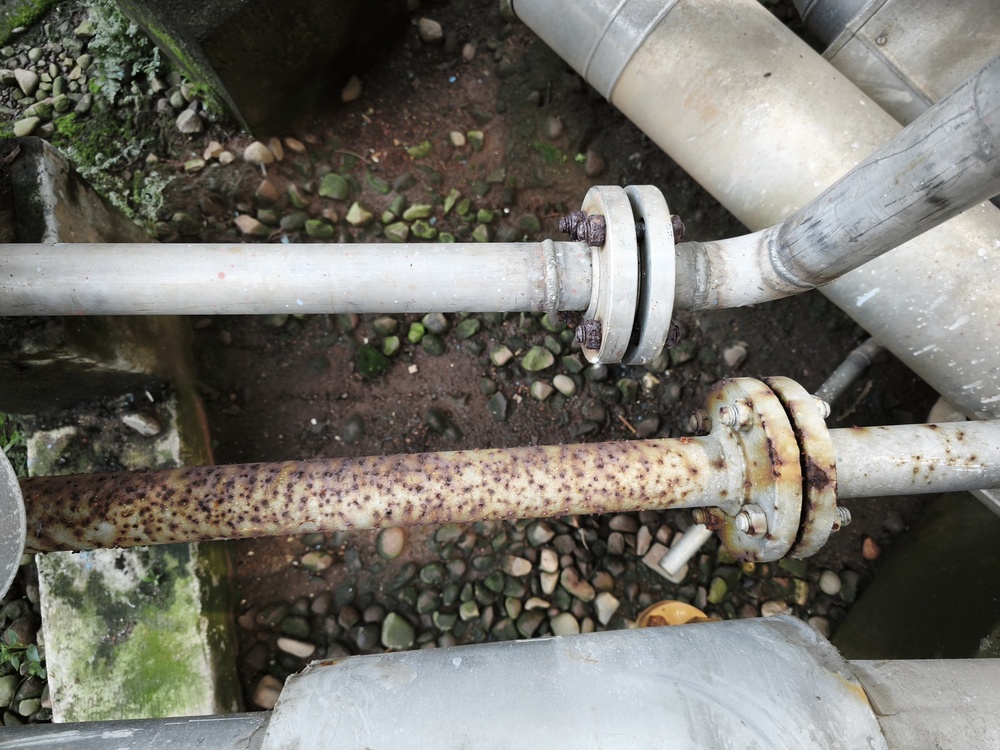
Corrosion Inhibitor Chemicals and Why Oil & Gas Operators Rely on Them
Corrosion inhibitor chemicals are specialized compounds added in low concentrations to a process stream, water system, or enclosed environment to reduce the electrochemical deterioration of a metal surface.
The Association for Materials Protection and Performance states a corrosion inhibitor works by slowing the chemical and electrochemical reactions that cause corrosion, thereby extending equipment life and reducing maintenance costs.
In the oil and gas sector, corrosion remains one of the most significant threats to pipelines, production facilities, refineries, storage tanks, and associated infrastructure. Exposure to carbon dioxide (CO2), hydrogen sulfide (H2S), oxygen, chlorides, water, and other corrosive agents creates conditions that can rapidly increase corrosion rate and lead to costly failures. For this reason, corrosion inhibitor chemicals are considered one of the four foundational pillars of modern corrosion control.
Four Pillars of Corrosion Control
- Corrosion inhibitor programs
- Cathodic protection systems
- Protective coatings and linings
- Material selection and metallurgy
The most effective operators do not rely on a single solution. Instead, they implement integrated asset integrity strategies that combine multiple layers of protection. SMARTCORR® provides solutions across all
four pillars, including chemical injection skids, Electrical Resistance (ER) and Linear Polarization Resistance (LPR) monitoring probes, Supervisory Corrosion and Erosion Monitoring Software (SCEMS) corrosion management software, cathodic protection systems, and In-Line Inspection (ILI) and Magnetic Flux Leakage (MFL) services. These integrated offerings help operators maintain asset reliability while meeting regulatory requirements.
Aging oil and gas infrastructure, H2S and CO2 rich production streams, increasingly challenging production environments, and Pipeline and Hazardous Materials Safety Administration (PHMSA) 49 CFR 192 and PHMSA 49 CFR 195-regulated transmission assets make corrosion management a business-critical priority. Undetected corrosion can result in leaks, environmental incidents, production losses, emergency shutdowns, regulatory penalties, and expensive repairs.
SMARTCORR® brings more than two decades of integrated corrosion control experience supporting upstream, midstream, and downstream operations worldwide. Its client portfolio includes major operators such as BP, ExxonMobil, Shell, ADNOC, Halliburton, Baker Hughes, Petronas, Petrobras, and TotalEnergies, reflecting the importance of comprehensive corrosion protection programs in safety-critical environments.
How Corrosion Inhibitor Chemicals Work: Mechanisms of Metal Protection
A corrosion inhibitor protects metal by interfering with the electrochemical reactions responsible for metal loss. While formulations vary, most inhibitors operate through one or more of three primary mechanisms.
Passivation
An anodic inhibitor creates a stable, protective oxide film on the metal surface. This passive layer reduces anodic metal dissolution and slows corrosion significantly. Common anodic corrosion inhibitor chemistries include chromates, nitrites, molybdates, tungstates, and orthophosphates. These compounds encourage passivation and can provide excellent corrosion protection when maintained at proper concentrations.
Protective Film Formation
Many organic corrosion inhibitors function by adsorbing onto the metal surface and creating a physical barrier between the metal and the surrounding environment. Examples include imidazolines, amines, amides, and phosphates. These film-forming products are especially common in oil and gas applications because they protect both anodic and cathodic reaction sites. Many of these formulations are classified as mixed inhibitors because they suppress multiple corrosion mechanisms simultaneously.
Environmental Conditioning
Some inhibitors reduce corrosion by removing or neutralizing the corrosive agent responsible for the attack. Examples include oxygen scavengers such as hydrazine, sodium sulfite, and sodium bisulfite. By eliminating dissolved oxygen, these water treatment chemicals reduce corrosion activity before it can occur.
Liquid-Phase vs. Vapor-Phase Protection
Most oil and gas inhibitor programs use liquid-phase products injected directly into process streams. However, volatile corrosion inhibitor (VCI) technologies are also important. A volatile corrosion inhibitor vaporizes and protects enclosed spaces such as tank headspaces, storage containers, equipment during layup, and packaging and transportation environments. As VCIs migrate through air spaces, they provide corrosion protection where liquid treatment is impractical.
Performance depends heavily on service conditions. A corrosion inhibitor that performs exceptionally well
in sweet CO2 service may be ineffective in sour environments containing hydrogen sulfide. Variables such as temperature, velocity, pressure, chlorides, water chemistry, and metal composition all influence inhibitor selection. To help operators match chemistry to operating conditions, SMARTCORR®'s SCEMS platform incorporates CO2 and H2S corrosion prediction capabilities alongside monitoring data from ER probes, LPR probes, coupons, and ultrasonic measurements.
Types of Corrosion Inhibitor Chemicals: Anodic, Cathodic, Mixed, and Volatile
Corrosion inhibitors are typically grouped into four major categories: anodic inhibitors, cathodic inhibitors,
mixed Inhibitors, and VCIs.
Anodic Inhibitors
An anodic inhibitor suppresses metal dissolution at anodic reaction sites. Common chemistries include chromates, nitrites, molybdates, tungstates, and orthophosphates.
- Advantages: Highly effective and strong passivation capability.
- Limitations: Precise dosing required and underdosing can increase localized pitting.
Cathodic Inhibitors
A cathodic inhibitor slows cathodic reactions such as oxygen reduction or hydrogen evolution.
Examples include zinc salts, polyphosphates, and cathodic poisons.
- Advantages: Generally safer under low-dose conditions and reduced risk of localized attack.
- Limitations: May act more slowly than anodic systems.
Mixed Inhibitors
Mixed inhibitors are among the most widely used products in oil and gas operations. Common chemistries include imidazolines, amines, amides, and film-forming formulations.
- Advantages: Protect entire metal surface, suitable for multiphase systems, and strong performance in oilfield environments.
- Limitations: Infectiveness at high substrate concentrations and unpredictable changes.
Volatile Corrosion Inhibitors (VCIs)
VCI products protect enclosed environments through vapor-phase action. Common examples include hexamine, cyclohexylamine, and dicyclohexylamine.
- Advantages: Ideal for storage and transportation.
- Limitations: Limited use in flowing process streams.
Accurate dosing is essential regardless of chemistry. SMARTCORR® chemical injection systems are engineered to API 675 standards with flow capacities from 0.1 to 250 L/h and pressures up to 20,000 psi, enabling precise inhibitor delivery across diverse applications.
Choosing the Right Corrosion Inhibitor Chemical for Your Application
Selecting the right corrosion inhibitor requires a systematic evaluation of the corrosion environment.
Step 1: Identify the Metal
Determine if the asset contains carbon steel, low-alloy steel, copper alloys, and corrosion-resistant alloys.
Copper corrosion, for example, often requires different chemistry than carbon steel systems.
Step 2: Characterize the Fluid
Understand the process environment: sweet CO2 service, sour H2S service, oxygenated water, brine systems, condensate systems, and multiphase production streams.
Step 3: Define Operating Conditions
Evaluate temperature, pressure, velocity, flow regime, and water cut.
Step 4: Select the Delivery Method
Options include continuous injection, batch treatment, and volatile corrosion inhibitor deployment.
Application Mapping
Cooling Water Systems
- Polyphosphates
- Molybdates
- Azoles
Boiler Feedwater
- Oxygen scavengers
- Neutralizing amines
- Morpholine
Oil and Gas Gathering Systems
- Imidazolines
- Amide-based film formers
- Mixed inhibitor formulations
Gas Transmission Pipelines
- Film-forming inhibitors
- Methanol-assisted programs
Refinery Overhead Systems
- Neutralizing amines
- Filming amines
Equipment Layup
- Volatile corrosion inhibitor products
Engineers must also consider interactions with other water treatment chemicals, including scale inhibitors, biocides, demulsifiers, and downstream processing requirements.
SMARTCORR® supports these decisions through Corrosion Design Memoranda (CDM) for new facilities and Corrosion Management Plans (CMP) for operating assets, helping operators establish long-term corrosion control strategies.
Dosing, Monitoring, and Verifying Inhibitor Performance
Even the best inhibitor chemistry can fail if dosing is inaccurate or performance is not verified. Inhibitor effectiveness is commonly expressed as the percentage reduction in corrosion rate compared with an untreated baseline. However, field validation is essential.
Corrosion Monitoring Tools
Operators typically use multiple technologies corrosion coupons, ER probes, LPR probes, ultrasonic wall-thickness monitoring, and hydrogen flux monitoring in sour service. Corrosion coupons provide direct metal-loss measurements, while ER and LPR technologies offer near real-time insights into corrosion activity.
SMARTCORR® emphasizes continuous monitoring by integrating probe data, coupon analysis, ultrasonic measurements, and process variables into the SCEMS platform. The software enables operators to compare corrosion rate data against chemical injection rates and optimize treatment programs based on actual field performance rather than theoretical assumptions. The company's API 675-compliant chemical injection skids include PLC controls, flow monitoring, telemetry capabilities, and integration with SCEMS for closed-loop optimization.
Safety, Environmental, and Regulatory Considerations for Inhibitor Programs
The corrosion inhibitor industry continues to evolve as environmental and worker-safety expectations increase.
Several traditional formulations face increasing restrictions. Exavalent chromates are being phased out due to carcinogenic concerns. Certain nitrite applications are being removed due to discharge limitations and heavy-metal-containing formulations are affecting sensitive environments.
Emerging alternatives include plant-extract-based inhibitors, amino-acid-derived products, ionic-liquid technologies, and biodegradable formulations. These products aim to maintain corrosion inhibition performance while reducing environmental impact. Operators must also consider several regulatory standards such as PHMSA 49 CFR 192, PHMSA 49 CFR 195, OSHA Process Safety Management (29 CFR 1910.119), and EPA Risk Management Program requirements.
SMARTCORR® supports compliance through solutions designed around NACE/AMPP, ANSI, ASTM, API, and ASME standards. The company also maintains certifications ISO 9001:2015 for Quality, ISO 14001:2015 for Environmental, and ISO 45001:2018 for Health and Safety. The company also reports zero recordable injuries across 1.5 million work hours from 2020–2025.
Integrating Corrosion Inhibitor Chemicals into a Lifecycle Integrity Program
Corrosion inhibitor programs are most effective when integrated into a broader asset integrity framework.
A lifecycle approach includes Corrosion Design Memorandum development during FEED, injection skid engineering and installation, commissioning and baseline monitoring, continuous corrosion surveillance,
data-driven optimization, and inspection and integrity validation. Corrosion inhibitor dosing should work alongside cathodic protection, ILI/MFL, ultrasonic guided wave testing, corrosion monitoring systems, and risk-based inspection programs.
SMARTCORR® delivers these capabilities through an integrated platform that combines corrosion monitoring, cathodic protection, chemical injection systems, SCEMS software, and inspection services from a single provider. This consolidated approach helps operators reduce administrative complexity, while improving corrosion control performance. We manufacture solutions in the U.S. and support customers through our PROSERVE technical service organization.
Frequently Asked Questions About Corrosion Inhibitor Chemicals
What is the smallest inhibitor dose that still provides meaningful protection?
There is no universal answer. The required concentration depends on chemistry, temperature, fluid composition, flow conditions, and metal type. Underdosing an anodic inhibitor can be particularly dangerous because it may accelerate localized corrosion.
How often should inhibitor programs be reevaluated?
Programs should be reassessed whenever operators observe increased water cut, hydrogen sulfide breakthrough, process chemistry changes, monitoring anomalies, regulatory audits, major turnarounds, and new facility commissioning
Are there universal inhibitors that work across every service?
No. Corrosion inhibitor selection is environment-specific. The right corrosion inhibitor for a sweet gas pipeline may perform poorly in a refinery overhead system or cooling-water application.
How long do corrosion inhibitor chemical last in storage and in service?
Shelf life varies by formulation. Storage temperature, packaging, freeze-thaw exposure, and concentration all affect product longevity. Operators should follow manufacturer recommendations and maintain SDS documentation.
SMARTCORR® is a global leader in providing a wide range of targeted, comprehensive solutions to the oil and gas, energy and petrochemical industries. Our array of equipment, software and services helps customers achieve asset integrity and reliability, sustainability objectives and profitability while prioritizing safety. We offer technical services, such as integrated corrosion management solutions, including corrosion management plans and corrosion monitoring, and data analysis and management.