Corrosion Management Software for Asset Integrity

Maintaining Oil and Gas Infrastructure

What Corrosion Management Software Does — and Why Your Oil & Gas Operation Cannot Run Without It

Corrosion management software provides a centralized platform that integrates real-time sensor data with predictive analytics. It takes the information from ER probes, LPR probes, coupons, and UT measurements and analyzes it to monitor asset degradation across facilities. The SCEMS platform from SMARTCORR® connects directly to sensor networks in pipes, tanks, and vessels to provide continuous visibility.

Unmanaged external and internal corrosion costs the global economy an estimated $2.5 trillion every year, which makes the software-driven monitoring provided by the SCEMS platform critical. It prevents unplanned shutdowns that can exceed $1 million per day in downstream operations. Corrosion management software also serves as the backbone of pipeline integrity management programs as required under PHMSA 49 CFR 192/195 and API 580/581 RBI frameworks.

Corrosion analysis software provides a number of advantages to users. First and foremost, it reduces the need for constant risk-based inspections, especially in hard-to-reach or inaccessible areas. By warning users of higher-than-expected levels of corrosion, monitoring software also makes it possible to replace components before they fail as part of regular maintenance. By keeping inspectors from having to access potentially dangerous areas, corrosion modeling software also helps maintain a safer workplace. Operators can make better-informed decisions about the care of their systems.

SMARTCORR® corrosion modeling software is a highly integrated and intelligent system. It covers multiple monitoring process parameters, such as process flow, pressure, temperature, the temperature in the cabinet, corrosion data, alarm, temperature, etc. Monitoring the corrosion is undertaken by a combination of the following methods: Electrical Resistance (ER) probes Weight Loss Coupons UT Wall Thickness Measurement Chemical sampling and analysis Cathodic Protection All the above methods give

SMARTCORR® corrosion modeling software is a highly integrated and intelligent system. It covers multiple monitoring process parameters, such as process flow, pressure, temperature, the temperature in the cabinet, corrosion data, alarm, temperature, etc.

Monitoring the corrosion is undertaken by a combination of the following methods:

  • Electrical Resistance (ER) probes
  • Weight Loss Coupons
  • UT Wall Thickness Measurement
  • Chemical sampling and analysis
  • Cathodic Protection

All the above methods give a direct or indirect indication of the condition of the process equipment and the corrosivity of the contained medium. The data and outcome or results of the different monitoring activities are to be combined in the software and analyzed according to users’ needs.

As an example, SMARTCORR® On-line Corrosion Probe System Consists of Access Fitting, Adapter, Transmitter, Cable, Junction Box, Intelligent Unit, Corrosion Management server and SCEMS software. The probe data is achieved in a user-defined interval and stored in SCEMS. The user can monitor the corrosion data in real time and make corresponding analysis by the SCEMS software.

SCEMS Features

SMARTCORR® Corrosion and Erosion Management System (SCEMS) This section is a description of the SMARTCORR® Corrosion and Erosion Management System (SCEMS) and the most common components within SCEMS. This also explains general techniques on how to ef

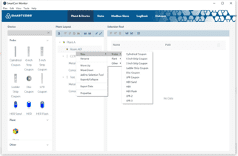
SMARTCORR® Corrosion and Erosion Management System (SCEMS)

This section is a description of the SMARTCORR® Corrosion and Erosion Management System (SCEMS) and the most common components within SCEMS. This also explains general techniques on how to effectively manage all your data and streamline the processes and information that are vital to your asset’s reliability, efficiency, and profitability.

SCEMS can apply widely across the board in many different industries, such as Utilities, Communication, Field Service, and the Retail sector.

  • Single User Desktop
  • On Server

1. Creating and Configuring a New Database

1.1Building the Plant Model
1.2The Selection Tool
1.3Properties Tool
1.4Configuring Measuring Points
1.5Process Diagrams

2. Data Entry

2.1Data Workbook Filter Options
2.2Logbook
2.3Coupon Corrosion Calculator

The Coupon Corrosion Calculator performs the task of calculating corrosion rates based on several parameters of an exposed coupon. This value is calculated automatically when all the necessary parameters have been entered, and the calculated value is then stored to the database.

Input Parameters:

  • Coupon Dimensions: Enter the area of the coupon being used and the density of the material from which the coupon is made.
  • Weight Loss: Enter the weight loss directly or the start and end weight. With the latter case, the Weight Loss field will be filled out automatically when both values have been entered.
  • Exposure Time: Enter the exposure time or the start date and the end date. In the latter case, the Exposure Time field will be filled out automatically when both dates have been entered.
  • Calculated Corrosion Rate: The Corrosion Rate field will be filled out automatically when all required fields have been completed. The Time tag field must be filled out before the data can be stored to the database. The corrosion rate can be displayed in either mm/y or MPY by selecting the appropriate radio button

3. Report Packages

SCEMS Reports are powered by Crystal Reports. The format of these reports allows them to be exported to Word, RTF, HTML or PDF. Points can either be sent to a report by highlighting a system, container or point in the Plant layout, or by selecting a group of points in the Selection Tool.

3.1Current Status Report
3.2Points in Alarm Report
3.3Configuration Report
3.4Log Report
3.5Calculated Parameter Report
3.6Statistical Report
3.7Detail Report
3.8Point History Report
3.9System Status Report

4. Data Analysis Using Graphs

4.1Producing a Single Graph
4.2Multiple Plot
4.3Overlay Plot
4.4Correlation Graph
4.5Comparison Plots
4.6Live Time Graph
4.7Various charts for analysis: Bar Chart / Area Chart / Ribbon Chart / Pie Charts

Corrosion Prediction Tool

CO2 and H2S corrosion (termed “acid gas corrosion”) in oil and gas production environments are key contributors to asset degradation and failure. Accurate quantification of corrosion and erosion is critical in order to enable improved assurance of th

CO2 and H2S corrosion (termed “acid gas corrosion”) in oil and gas production environments are key contributors to asset degradation and failure. Accurate quantification of corrosion and erosion is critical in order to enable improved assurance of the safe utilization of steels across almost every production unit in oil and gas production and transmission.

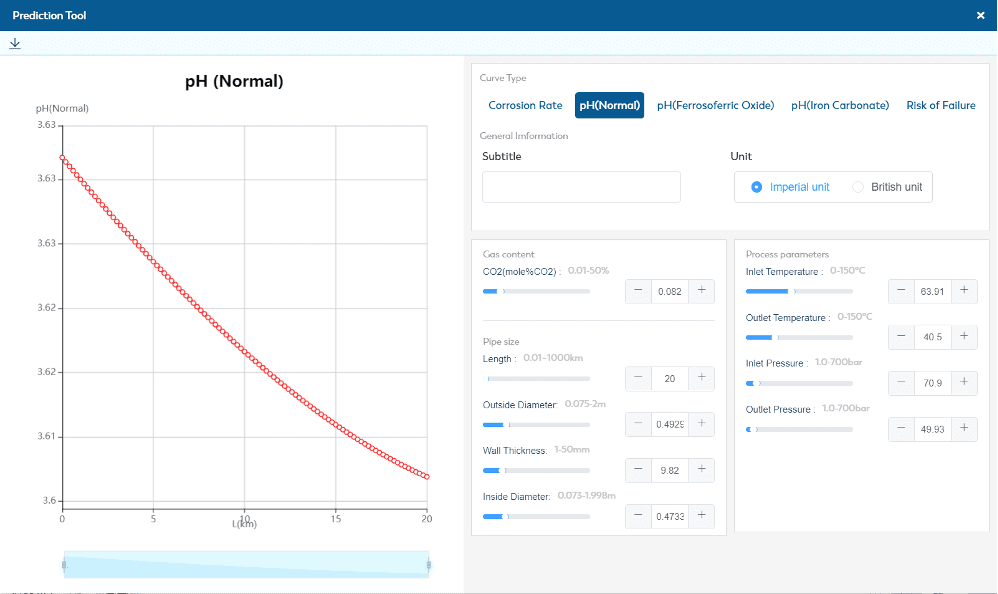
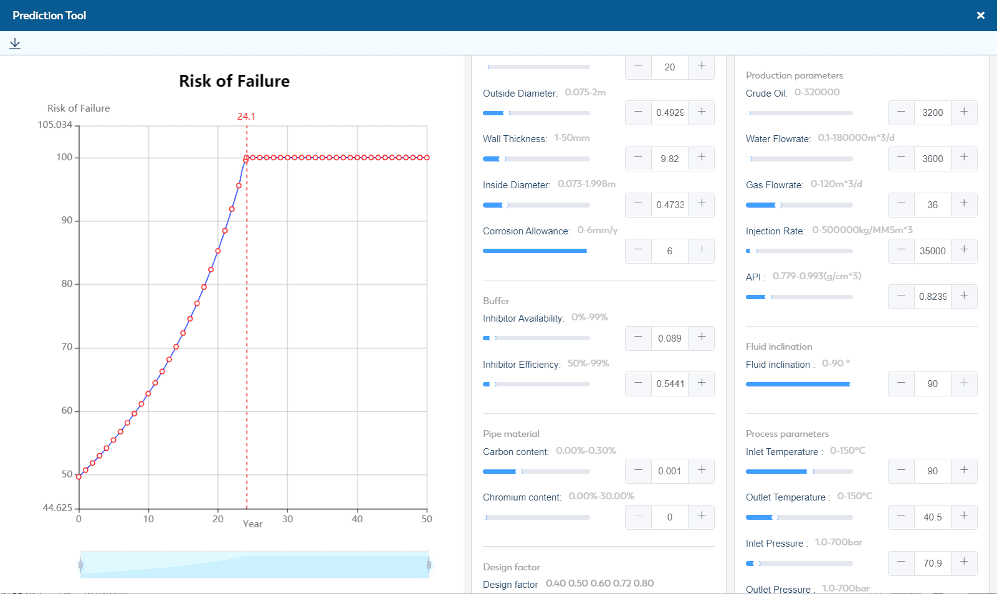
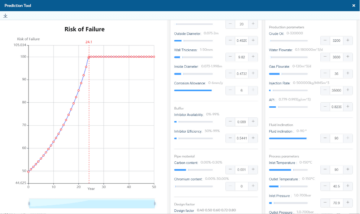
Corrosion risk prediction is a module in SCEMS, which takes an integrated, comprehensive perspective to intelligently assess system corrosivity. SCEMS also facilitates prediction of corrosion and erosion rates for carbon steels in production/transmission environments containing CO2 and/or H2S. Based on decades of joint Industry Program research and industry utilization data, Predict captures the effects of key critical environmental and operating parameters that influence corrosivity. It further characterizes the effects of these parameters on corrosion rates, utilizing extensive laboratory data, phase behavior models and fluid dynamic characterization.

This corrosion module provides a practical prediction of system corrosivity for carbon steel based on available operational parameters such as:

  • Application or process data (e.g, pressure, temperature, gas oil and water flow rates)
  • Speciation data (e.g, acid gas concentration and water analyses)
  • Project data (e.g., service life, corrosion allowance, well or stream information)

Once the input data is entered, there are usually three ways to output the forecast data:

  1. Corrosion rate prediction (expressed in mpy or mmpy)
  2. Risk of failure prediction
  3. pH value prediction

The prediction accuracy depends on the accuracy of the input process data, speciation data and project data, etc. A report is to be generated accordingly.

How SCEMS Keeps You Compliant with AMPP, API, and PHMSA Standards

The capabilities found in SCEMS help corrosion management plans comply with requirements including PHMSA 49 CFR 192/195 for pipeline operators (integrity management program documentation), API 570/510 for piping and pressure vessel inspection (corrosion rate records), and OSHA PSM 1910.119 for process facilities (mechanical integrity monitoring).

Its automated alarm system featuring multi-level thresholds ensures corrosion exceedances trigger immediate notifications. This supports the monitoring requirements recommended in API 571, which catalogs nearly 70 damage mechanisms affecting fixed equipment in the refining industry. Our triple ISO certification (9001:2015 Quality, 14001:2015 Environmental, 45001:2018 Safety) also extends to our software development and deployment processes. In addition, our engineering team designs SCEMS to ensure alignment with NACE, ANSI, ASTM, API, and ASME standards.

Where SCEMS Delivers Results: From Upstream Wellheads to Downstream Process Units

The SCEMS platform serves the needs of numerous sectors within the oil and gas industry, including:

  • Upstream operators monitoring wellhead tubing and gathering lines for CO2/H2S-driven corrosion
  • Midstream pipeline companies tracking wall thickness across thousands of miles under PHMSA mandates
  • Downstream refineries and petrochemical plants managing high-temperature sulfidation, naphthenic acid corrosion, and amine unit degradation — where unplanned shutdowns cost $1M+ per day

SCEMS supports desktop deployment for individual facilities as well as server deployment for multi-site operations with offline data syncing. This is critical for remote upstream locations that have only intermittent connectivity where monitoring data must be captured locally and synchronized when connections are restored.

Our client roster spans all three sectors, and includes names such as ADNOC, BP, ExxonMobil, Shell, Petronas, Halliburton, and Baker Hughes. SMARTCORR® considers this validation that SCEMS can scale from individual facility monitoring to enterprise-wide corrosion control programs across 5,000 kilometers of inspected pipelines.


How often should probes be calibrated?

To provide the most accurate data, the National Association of Corrosion Engineers recommends calibrating probes and sensors at least once a year. However, equipment used in harsh conditions or is handled frequently may need to be calibrated more oft

To provide the most accurate data, the National Association of Corrosion Engineers recommends calibrating probes and sensors at least once a year. However, equipment used in harsh conditions or is handled frequently may need to be calibrated more often.

Does SCEMS work without an Internet connection?

Yes, SCEMS offers offline data syncing for use with no-cellular coverage pipelines. Combined with its legacy sensor integration, this software platform provides flexibility needed to watch over valuable infrastructure.

Yes, SCEMS offers offline data syncing for use with no-cellular coverage pipelines. Combined with its legacy sensor integration, this software platform provides flexibility needed to watch over valuable infrastructure.

REQUEST A QUOTE

If you are interested in what we offer, connect with us. We look forward to hearing from you.

Contact Us